
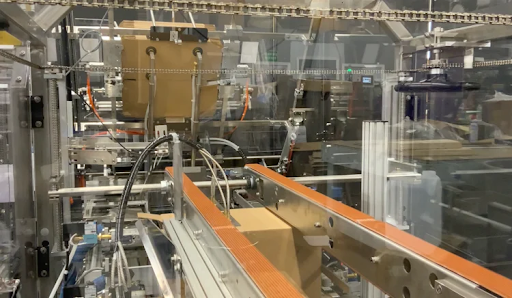
Packing cases by hand is the starting point for many manufacturers. When production volumes are low, it can get the job done without investing in additional equipment. But as production grows, the costs of manual case packing can start adding up in ways that aren't immediately obvious.
So, when does it make sense to consider case packing automation? Here are a few signs that your current process may be costing more than it should:
- Production is ramping up, and you can only keep up by adding more employees and approving overtime more than you’d like
- Bottlenecks are becoming more frequent and your team is scrambling to keep things moving
- There are more packing errors and you’re spending extra time correcting mistakes
- You're running out of space as you add more people and packing stations
You don't have to automate your entire secondary packaging process if it doesn’t fit your operation. We’ll show you how to identify where your process could be more efficient and what to do next.
When should you stick with manual case packing?
Flexibility is so important, especially for manufacturers running smaller batches or frequently changing product configurations. Automation needs to solve an actual problem. If manual packing is meeting your production needs without creating unnecessary costs or delays, it may still be the right approach.
But what happens when you start wondering whether your current process can keep up with growing demand?
The hidden costs of manual case packing
You probably know what it costs to staff your packing stations. But is that the total cost of getting cases out the door?
Staffing and Training
Most CPG companies reported 10% to 29% turnover among their packaging line employees in 2025. When an experienced packer leaves, it can cause serious disruptions on the line. New employees need time to learn the process and get up to speed. Supervisors have to spend more time training, and other employees may need to cover staffing gaps. These costs can add up quickly.
Packing Delays
When manual packing falls behind, products can accumulate and upstream equipment may need to slow down or stop. Rushing to catch up can also increase the likelihood of packing mistakes and unsafe handling.
Errors and Rework
Reopening cases, recounting products, repacking items, and replacing damaged materials all drain time and resources. Even small errors become expensive when employees have to spend time doing re-work they've already completed.
More Space and Physical Demands
Adding packing stations requires room for additional employees, equipment, and materials. Hand packing is not easy work, and repetitive reaching and lifting can place physical demands on employees throughout a shift.
These expenses are easy to overlook when you're only tracking the labor cost of packing each case.
How much is manual case packing really costing you?
Before you start looking at equipment, figure out what you're actually spending to pack each case. Track the labor hours involved in packing, including overtime, and account for additional expenses like training and rework.
Compare those costs with the number of correctly packed cases your team produces over the same period. It's also worth tracking how often packing delays affect the rest of your production line.
If you're seeing your packing costs per case increase as production grows, it may be time to look at which tasks could benefit from automation.
Does case packing automation reduce these costs?
Before you overhaul your packaging line, consider whether automating one repetitive task could be enough. Think about what goes into packing products into a finished case:
- Someone has to form the empty case.
- Products need to be arranged into the correct pack pattern and loaded.
- The case has to be sealed for shipment.
Depending on your operation, you might automate just one of these steps while keeping others manual. Or you may be ready to automate more of the process.
Either way, automation can help your existing team keep up with growing production without taking on more repetitive work.
But remember that any equipment you add will have its own operating and maintenance requirements. That's why it's worth identifying where automation would make the biggest difference and whether those improvements justify the investment.
Finding the right fit for your operation
Once you've figured out where your packing process needs the most help, the next step is finding equipment that addresses it.
At Econocorp, we build case packing equipment around those needs. Here are a few examples of how our machines support different parts of the process:
- EconoPacker takes care of carton grouping, arranging products into the required pack pattern so operators don't have to do it by hand.
- EconoCaser handles case erecting and sealing. Product loading can remain manual or be automated depending on your application.
- Wrap Around Spartan forms and seals wrap-around cases or trays, with manual loading or optional automatic loading available.
We'll work with you to find equipment that fits your current operation and supports your production goals
Make case packing work for your current and future needs
There’s no single point when manual case packing becomes too expensive. The answer is in your production numbers and whether your current process can support what's coming next.
If the numbers suggest it's time for a change, contact us to start exploring automation options that will help you keep up with demand.